
NATDA
Training Resources
Evidence-based guidance for building reliable truffle dogs — from first nose work to field-ready performance.
Built on Science, Proven in the Field
Truffle dog training is a discipline that rewards patience, precision, and a deep understanding of canine scent work. NATDA's training resources draw on the latest research in olfactory science, behavioral conditioning, and real-world harvest experience.
Whether you're introducing a puppy to nose work or preparing an experienced dog for certification, these resources provide a structured path forward.
Core Training Principles
Scent Imprinting
Proper introduction to truffle odor is the foundation of everything. Learn how to build a strong, reliable odor association from the very first session.
Reward-Based Conditioning
NATDA endorses force-free, positive reinforcement methods. Dogs trained with clear reward structures show stronger, more durable alert behaviors.
Field Generalization
A dog that finds truffles in a training box must learn to find them in real soil, under real canopy, in variable conditions. Generalization is the hardest and most important step.
Handler Mechanics
The handler's movement, timing, and body language directly affect the dog's performance. Training the handler is as important as training the dog.
Training Stages
A progressive framework from foundation to field-ready
Foundation: Odor Introduction
Weeks 1–4Introduce the dog to truffle odor in a controlled, low-distraction environment. Build a strong positive association using high-value rewards. Focus on enthusiasm and clarity of indication.
Intermediate: Buried Targets
Weeks 5–12Progress from surface odor to buried targets at increasing depths. Introduce soil variables — moisture, temperature, competing organic matter. Maintain reward rate to sustain drive.
Advanced: Field Conditions
Months 3–6Move training into real orchard and forest environments. Introduce distractions, varying canopy, and multiple target locations. Begin working on handler-dog communication at distance.
Certification Preparation
Months 6+Refine the dog's alert behavior to meet NATDA certification standards. Practice under simulated evaluation conditions. Address any gaps in generalization or handler mechanics.
Breed Considerations
NATDA's certification is breed-neutral — any dog with the drive, nose, and temperament can become a certified truffle dog. That said, certain breeds have established track records in truffle work, and understanding breed tendencies helps handlers set realistic expectations and tailor their training approach.
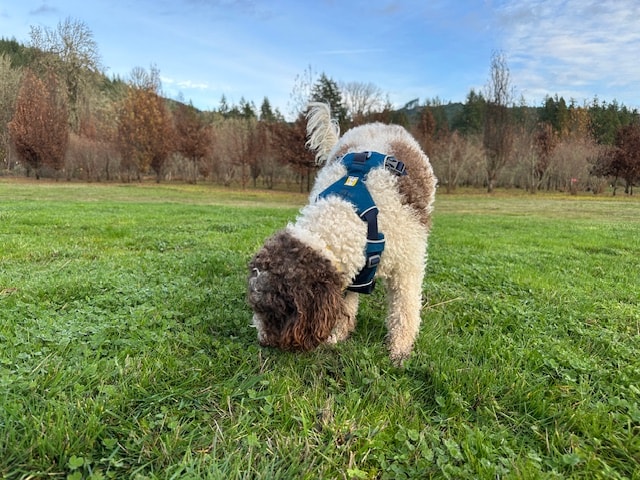
Lagotto Romagnolo
ItalyThe only breed historically developed specifically for truffle hunting. Strong natural drive, excellent nose, and a biddable temperament. The benchmark breed for truffle work worldwide.
Labrador Retriever
United KingdomExceptional scent drive and food motivation make Labs highly trainable for truffle work. Widely used in North American programs. Excellent for handlers new to scent work.
Standard Poodle
Germany/FranceHighly intelligent with strong retrieve instinct. Poodles excel when trained with clear reward structures. Their low-shedding coat is practical for orchard and forest work.
Mixed Breeds
AnyMany of the most successful truffle dogs are mixed breeds. Drive, temperament, and trainability matter far more than pedigree. NATDA's breed-neutral standard reflects this reality.
Recommended Resources
Vetted reading, research, and tools for serious handlers
Canine Olfactory Science
Understanding how dogs process scent at a physiological level helps handlers make better training decisions. Alexandra Horowitz's work on dog cognition is an accessible starting point.
Nosework Foundations
The K9 Nose Work framework developed by NACSW provides an excellent foundation for any scent-based sport, including truffle work. Many truffle trainers begin here.
Truffle Cultivation & Ecology
Understanding truffle biology — how they grow, when they ripen, and what soil conditions they prefer — makes you a better handler and a more effective hunting partner.
NATDA Certification Program
The most direct path to validating your dog's skills. Review the certification requirements and begin preparing your dog for evaluation under real harvest conditions.
Ready to Get Certified?
When your dog is field-ready, NATDA certification is the standard that matters. Review the three-tier program and begin your application.